Turning evidence into action.
Araminta strengthens the ability of human rights defenders to document violations and pursue accountability – particularly in complex, high-risk environments.
What we do:
- Support research on corporate human rights abuses
- Trace violations across global supply chains
- Enable legal action through EU, OECD, and national mechanisms
Our work has documented systemic failures in corporate due diligence, including cases affecting Indigenous communities in Russia’s Far East and Siberia. These violations are often embedded in transnational supply chains linking local harm to global markets.
We translate evidence into actionable pathways – from complaints under supply chain laws to international advocacy and media exposure.
Business & human rights capacity-building
in Eastern Europe and Central Asia
Araminta is committed to raising the capacities of human rights defenders in Europe and Central Asia in the field of business and human rights (BHR). Long a neglected area of engagement, victims of corporate harms in the region often have little access to remedy.
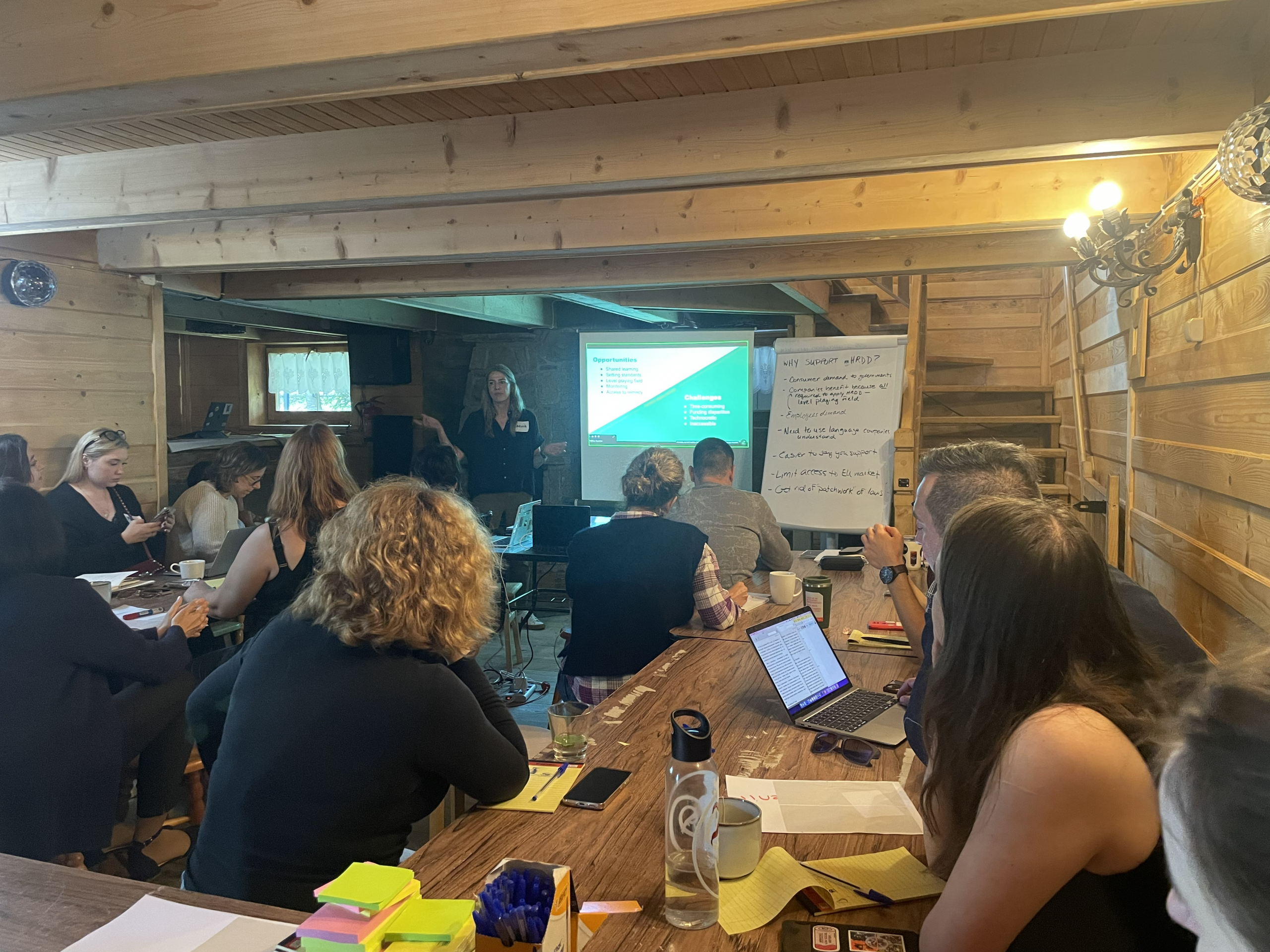
In a 2025 pilot project, we provided a BHR expert training to 25 Russian HRDs living in exile and subsequently supported five research projects through a mini-grant competition. The research projects document a systemic failure of corporate human rights due diligence in conflict-affected and high-risk contexts such as Russia, with particularly severe consequences for vulnerable populations both within and outside the country. Indigenous communities in Russia’s Far East and Siberia – including the Evenks, Chukchi, and Indigenous peoples of Sakha, Tuva, and Buryatia – face environmental destruction, resource dispossession, and cultural devastation from extractive industries that operate through complex transnational corporate structures designed to minimize accountability. These supply chains extend globally, connecting violations on Indigenous lands to steel production in Vietnam, European construction markets, and international investment portfolios.
The potential impact of these projects lies in their ability to examine critical accountability gaps through multiple enforcement mechanisms and advocacy pathways. By documenting specific violations and tracing corporate responsibility through ownership chains, sanctions registries, and supply networks, the research provides evidence for complaints to German enforcement authorities under the Supply Chain Due Diligence Act, OECD National Contact Points, European Commission sanctions enforcement, and potential other mechanisms.
Through targeted complaints, parliamentary inquiries, media publication, and presentation at international forums like the UN Forum on Business and Human Rights, these projects have the potential to strengthen both the understanding and implementation of HHRDD requirements, explore pathways for corporate accountability in conflict contexts, and provide affected populations with more tools to demand meaningful remediation and participation in decisions affecting their territories and livelihoods.